Dubai’s manufacturing sector has seen tremendous growth over the years, with the city becoming a global manufacturing hub. The manufacturing industry in Dubai has been embracing new technologies and innovations to stay competitive in the market, and the latest technology to enter the scene is glass technology. Glass technology has the potential to revolutionize the manufacturing sector, and Dubai is at the forefront of this transformation. As we look towards As we look towards the Future of Glass Technology in Dubai Manufacturing Sector is limitless.
In recent years, the use of glass technology in manufacturing has gained momentum due to its numerous benefits, including durability, energy efficiency, and cost-effectiveness. Dubai’s manufacturing industry is to take advantage of this technology to improve its operations and increase its competitiveness. With advancements in glass technology, manufacturers can now create glass that is stronger, lighter, and more flexible than ever before, making it an ideal choice for a wide range of applications.
This technology has the ability to revolutionize the way products are manufacture and has already begun to transform various industries. In this blog post, we will explore the future of glass technology in Dubai’s manufacturing sector and how it is set to change the game for the industry.
Current State of Glass Technology in Dubai
Dubai is known for its innovative and modern architecture, and glass technology plays a significant role in creating the city’s stunning skyline.
The current state of glass technology in Dubai is advanced, with many buildings featuring cutting-edge glass facades and windows. One notable example is the Burj Khalifa, the world’s tallest building, which has a distinctive glass curtain wall that reflects the changing colors of the sky.
Another impressive building is the Dubai Frame, which features a massive glass bridge that offers panoramic views of the city. The bridge is made of high-strength laminated glass, which is designed to withstand extreme winds and temperatures.
In addition to their aesthetic appeal, many of these buildings also use advanced glass technology to improve energy efficiency and reduce the building’s carbon footprint. For example, some buildings use double-glazed glass to insulate against heat and noise, while others use low-emissivity coatings to reflect heat and reduce cooling costs.
Overall, the state of glass technology in Dubai is highly advanced and continues to push the boundaries of what is possible in modern architecture.
Advancements in Glass Technology
Glass technology has come a long way since the invention of the first glass mirror in ancient Egypt around 4000 years ago. Today, glass is use in a wide range of applications, from smartphone screens to skyscrapers. Here are some of the recent advancements in glass technology:
- Smart Glass: Smart glass, also known as switchable glass, can change its properties based on an electric current, light, or heat. This technology has a range of applications, including windows that can adjust their tint to regulate the amount of light entering a building, or car windows that can become opaque for privacy.
- Self-Cleaning Glass: Self-cleaning glass uses a special coating that causes water to bead up and run off the surface, taking dirt and dust with it. This technology is particularly useful for large glass buildings and solar panels, which can become dirty and lose efficiency over time.
- Flexible Glass: Flexible glass is a type of ultra-thin glass that can be bent and shaped without breaking. This technology is particularly useful for flexible displays, wearable electronics, and medical devices.
- Gorilla Glass: Gorilla Glass is a type of toughened glass that is resistant to scratches, cracks, and impacts.
- Transparent Aluminum: Researchers have recently developed a new type of glass that is as strong as steel. This material, known as transparent aluminum, is made by combining aluminum oxide powder with a special glass matrix. It has a range of potential applications, from military armor to aerospace components.
- 3D Printed Glass: 3D printing technology has recently been applied to glass, allowing for the creation of complex, intricate structures that were previously impossible to manufacture. This technology has potential applications in architecture, design, and engineering.
For more: Why Glassrus is the Best Choice for Glass Services in Dubai
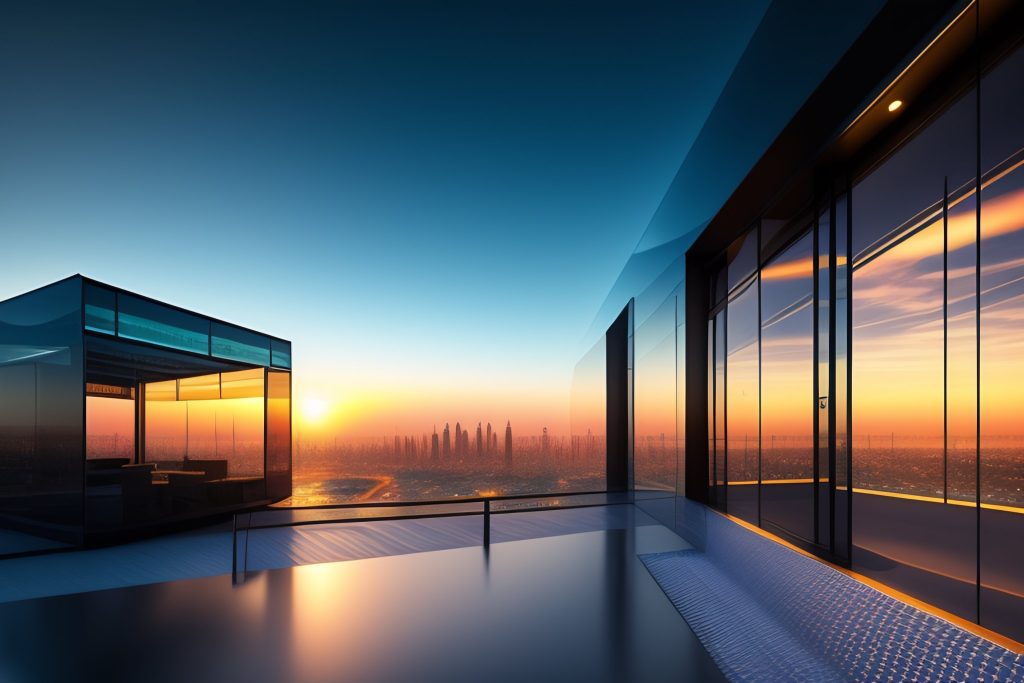
Future of Glass Technology in Dubai
Dubai has always been at the forefront of innovation and technology, and the future of glass technology in the city looks promising. With its towering skyscrapers and unique architectural designs, Dubai has become a hub for glass technology advancements.
One of the latest innovations in glass technology that Dubai has embraced is the use of smart glass. Smart glass can be electronically controll to switch from transparent to opaque, allowing for privacy and energy efficiency. This technology is already being in some of Dubai’s buildings, including the Burj Khalifa and the Emirates Towers.
Another development in glass technology that is to gain momentum in Dubai is the use of photovoltaic glass. This type of glass can generate electricity from sunlight, making it an ideal choice for skyscrapers and other tall buildings with large glass surfaces. Dubai, with its abundant sunshine, could benefit greatly from this technology.
Furthermore, Dubai has also been exploring the use of self-cleaning glass technology. Which coats with a thin layer of titanium dioxide that reacts with sunlight to break down organic materials. And keep the glass clean. This technology can reduce the need for manual cleaning and maintenance, saving time and resources.
Dubai’s commitment to innovation and technology is to drive the development of new glass technologies in the city. With the increasing use of smart glass, photovoltaic glass, and self-cleaning glass. Dubai is sure to remain a leader in glass technology for years to come.
Benefits of Glass Technology in Dubai’s Manufacturing Sector
Glass technology has become an integral part of Dubai’s manufacturing sector due to its numerous benefits. Here are some of the benefits of glass technology in Dubai’s manufacturing sector:
- Energy efficiency: Glass technology helps in reducing energy consumption by allowing natural light to enter the buildings. This reduces the need for artificial lighting, which leads to lower electricity bills and lower carbon emissions.
- Design flexibility: Glass technology offers a high degree of design flexibility, allowing manufacturers to create unique and visually stunning products. It also allows for the creation of complex shapes and curves, which is not possible with traditional materials.
- Durability: Glass is a highly durable material, capable of withstanding extreme weather conditions and wear and tear. This makes it an ideal material for manufacturing products that need to last for a long time.
- Safety: Glass technology has come a long way in terms of safety features. Modern glass is to break into small, rounded pieces instead of sharp shards, which reduces the risk of injury.
- Sustainable: Glass is a sustainable material that can be recycled indefinitely. This makes it an eco-friendly choice for manufacturers who want to reduce their environmental impact.
- Improved quality: Glass technology has improved the quality of manufactured products by providing manufacturers with precise control over the manufacturing process. This results in products that are more consistent in terms of size, shape, and quality.
Overall, glass technology has transformed Dubai’s manufacturing sector by providing manufacturers with a range of benefits that are hard to match with traditional materials. Its energy efficiency, design flexibility, durability, safety, sustainability. And improved quality make it an ideal material for manufacturing a wide range of products.
Conclusion
In conclusion, the Future of Glass Technology in Dubai manufacturing sector is promising and . With advancements in technology, the use of glass in construction and architecture has become more diverse and efficient. Leading to sustainable and aesthetically pleasing designs. The innovative use of glass in Dubai’s iconic buildings. Such as Burj Khalifa and the Dubai Frame has already set a benchmark in the industry.
Moreover, the increasing demand for eco-friendly and energy-efficient buildings has led to the development of smart glass technology. Which has the potential to revolutionize the construction industry. The incorporation of features like adjustable transparency, solar control. And self-cleaning capabilities can significantly reduce the carbon footprint of buildings and enhance their functionality.